Some water sloshing in the bilge after a hard ride is normal. A ski that's riding low, listing, swamped at the dock, or came back up from a sinking is a genuine emergency — not because of the hull, but because of what water does inside an engine and electrical system once the clock starts. Corrosion begins in hours, not days. Here's the playbook.
Right Now — In the Water
- Get it out or get it level. Head straight for the ramp, lift, or beach. If it's swamping fast, keeping the bow up protects the engine longest.
- If the engine is still running and you're safe, ride it out shallow. But the moment it sputters or the ski feels heavy — shut it down.
- If the engine died in the water, do NOT crank it. This is the rule that saves engines. If water got into the cylinders, cranking it hydrolocks the engine — water doesn't compress, and the starter will bend rods trying. A drowned engine that isn't cranked is very often savable. A hydrolocked one is a rebuild.
Once It's Out of the Water
- Pull the drain plugs and tip the bow up so the hull empties.
- Disconnect the battery — wet electrics plus live power equals fried components and corroded connectors.
- Don't test-start it "to see." Same hydrolock risk as on the water. The urge is enormous. Resist it.
- Call right away — not Monday. A submerged engine needs to be "pickled" (drained, flushed, fogged, and oiled) as soon as possible. Every day it sits wet, salt corrosion eats what would have been savable.
Why Was It Taking On Water?
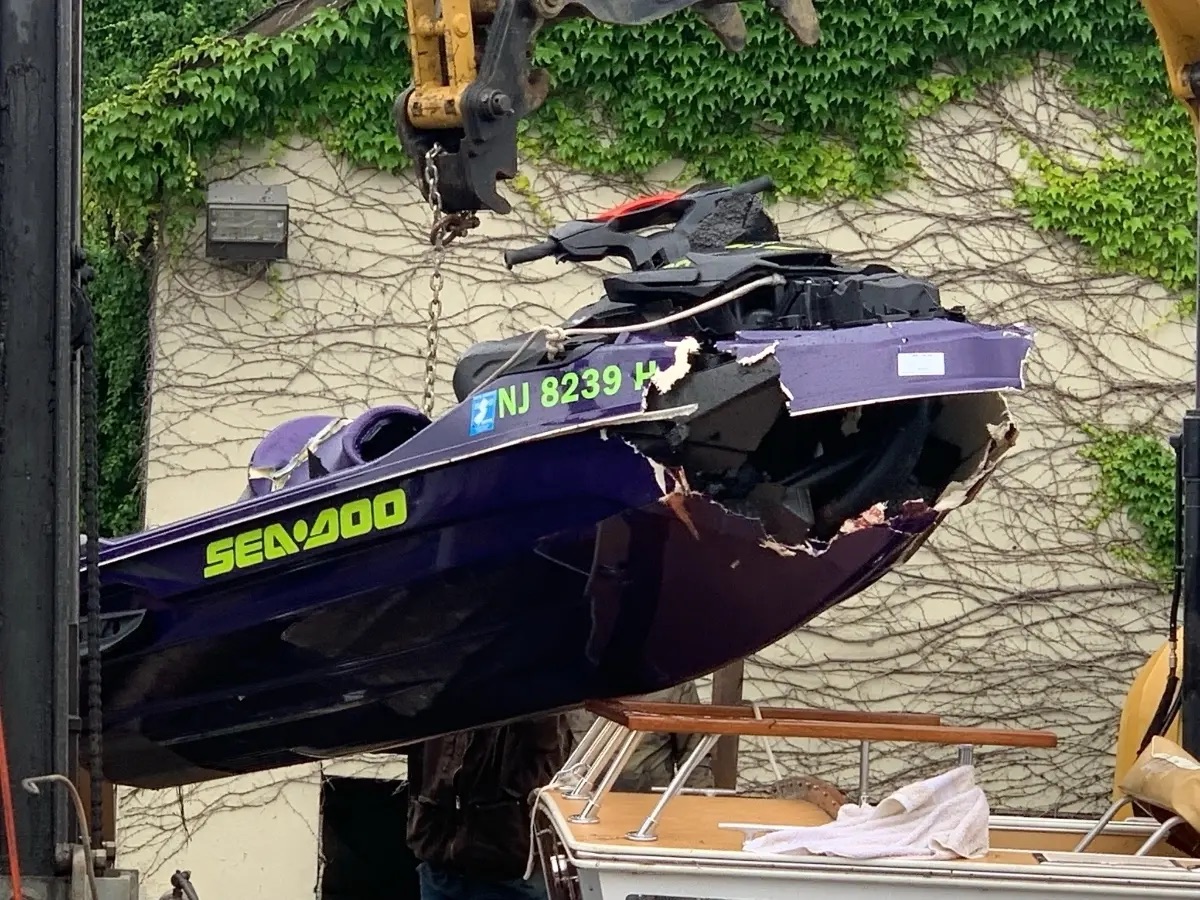
Finding the leak matters as much as drying it out. The usual sources, roughly in order: drain plugs left out or worn (it happens to everyone once), a failed carbon ring / driveshaft seal — often after a rope strike — cracked or loose cooling and exhaust hoses, a leaking hull fitting or ride plate seal, or actual hull damage from an impact. We pressure-check and trace the source so it doesn't happen twice.
Insurance and Water Damage
Sudden swamping, storm damage, and collision-related water intrusion are often covered by PWC policies — gradual neglect isn't. How the incident gets documented frequently decides the claim. We document the cause properly and handle the claim end to end, from adjuster communication to the approved repair.
FAQ
My jet ski sank — is the engine ruined?
Not necessarily. A submerged engine that was never cranked afterward is very often savable if it's pickled (drained, flushed, fogged, and re-oiled) within a day or two. The engines we lose are usually the ones that were cranked while full of water or left to sit wet for a week.
Why is there always water in my hull after riding?
A few cups can be normal from spray and the driveshaft seal. More than that — or water that keeps coming back at the dock — points to a real source: drain plugs, the carbon ring seal, a cooling hose, or a hull fitting. Persistent water is worth tracing before it finds the engine.
Should I start my jet ski after it swamped?
No. If there's any chance water reached the engine, cranking it can hydrolock and destroy it. Pull the plugs, disconnect the battery, and have it inspected first — the restraint can save you an engine rebuild.
Is water damage covered by jet ski insurance?
Often, when it's sudden and accidental — swamping, storms, collisions. Gradual leaks from wear usually aren't. Proper documentation of the cause is what makes or breaks the claim, and we handle that as part of managing claims start to finish.
Water Emergency? Call Now
We treat water ingestion as a priority call — the sooner the machine is pickled and dried, the more we can save. Mobile across Long Island.
📞 Call / Text 516-765-1861 Request Service Online